Next.js & React Development
 White-Label & Dedicated Teams - Offshore developers, maintenance and agency support
Headless CMS - Sanity, Payload, Storyblok, Prismic, Contentful, Strapi and Next.js
AI Solutions - AI agents, chatbots, automation and machine learning
WordPress & WooCommerce - Custom themes, plugins and online stores
Shopify & eCommerce - Shopify, BigCommerce, PrestaShop and Webflow builds
HubSpot CMS - Custom themes, modules and integrations
Custom Web Development - PHP, Laravel, CodeIgniter, CakePHP, MERN and MEAN
Mobile App Development - iOS, Android, Flutter and React Native
Business Software - CRM, ERP, SaaS and enterprise applications
UI/UX & Frontend - Figma, design systems and pixel-accurate Figma-to-HTML
Pages that load fast and rank well
Next.js & React Done Properly
A slow, heavy website costs you visitors before they read a word. Many sites built on React alone also struggle with search engines and with keeping every page consistent.
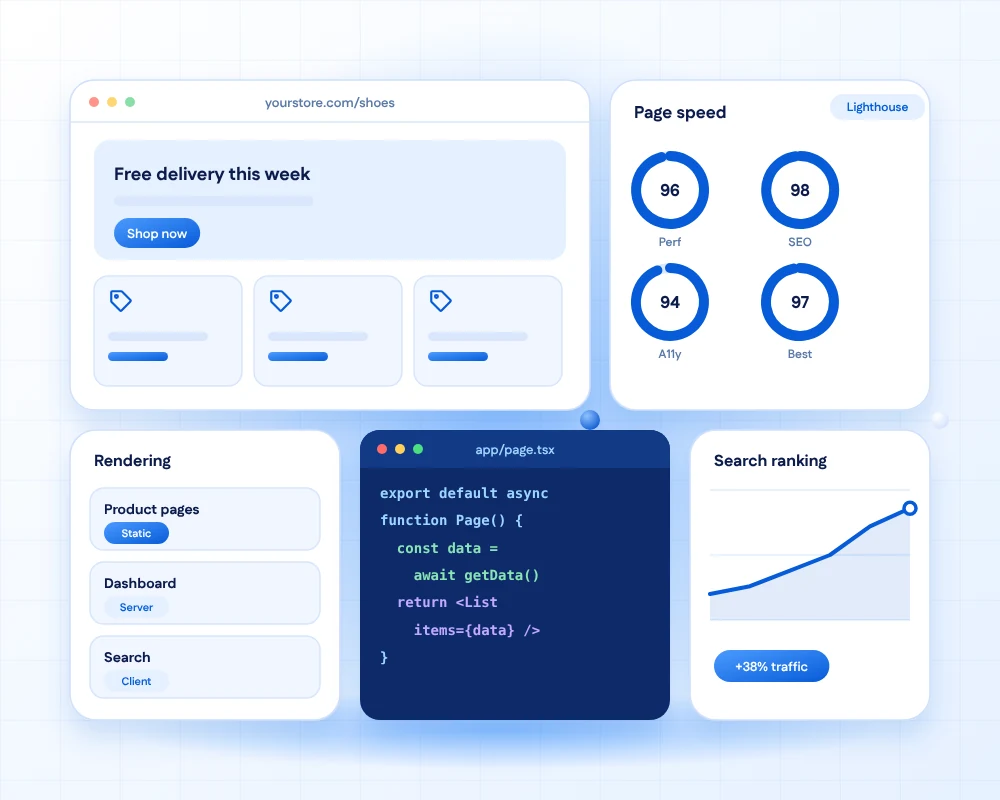
We build with Next.js and React in TypeScript, choosing for each page whether it is built ahead, built on request or interactive in the browser, so you get speed where it matters and richness where it helps.
Components, content and performance targets are agreed up front, so the site stays quick as it grows.
- 11+Years of building business software
- 50+Global long-term clients
- 2,000+Projects delivered
- 24 hrsResponse time on queries
Why it matters
From heavy pages to fast, findable ones
What changes when the front end is built for speed and clarity.
Before
Common problems- Pages load slowly and search engines struggle to read them
- Every small change needs a developer and a full release
- The interface looks different on every page
- The front end and the back end are hard to change separately
After
What you get- Pages arrive fast, fully formed and easy for search engines to read
- Editors update content without touching code
- A shared component library keeps every page consistent
- A clean API layer lets each side change on its own
Right tool per page
Three ways to deliver a page
We mix them, page by page, for the best speed and freshness.

Static pages
Built ahead of time and served from the edge. Best for marketing pages, product pages and articles.
Fastest
Server-rendered pages
Built on request, so content is fresh and personal. Best for dashboards and account pages.
Fresh
Interactive client pieces
React components for search, filters, carts and forms, added only where they are needed.
Interactive
Services
Our Next.js & React Services
From a first site to a full web application.

Marketing and product sites
Fast, accessible sites that rank, with a CMS so your team can publish without a developer.

Web applications
Dashboards, portals and tools with authentication, role-based screens and real-time updates.

Headless commerce front ends
Custom storefronts on Shopify, WooCommerce or your own platform, with quick browsing and checkout.

Component libraries
Documented, tested React components that keep design and code in step.

SEO and performance
Core Web Vitals fixes, structured data and clean metadata, measured before and after.

AI in the interface
Search that understands meaning, assistants inside the page and streaming answers, with clear controls.
What we measure
A front end is judged by results
We agree these measures at the start and track them after launch.
How we work
From plan to monitored launch
Five steps that keep quality high.
Pick the right rendering
Decide page by page what can be built ahead of time and what must be live.
PlanDesign components first
Build a small, consistent set of components before the pages.
Design systemConnect content and data
Wire up your CMS, commerce platform or APIs with typed data.
IntegrateTest on real devices
Check speed, accessibility and layout on phones, tablets and slower connections.
ProveLaunch and monitor
Deploy with preview links, performance budgets and alerts for regressions.
Operate
Built to be trusted
What we verify before launch
The habits that keep a site fast and accessible.
- Performance budgetPage weight and script size are limited and checked on every release.
- Accessible by defaultSemantic markup, focus handling and tested colour contrast.
- SEO basics done rightTitles, descriptions, canonical links, sitemaps and structured data.
- Typed end to endTypeScript from the data layer to the component.
- Preview environmentsEvery change can be reviewed on its own link before it goes live.
- Visual and unit testsKey components and journeys are tested automatically.
Need a back end to match?
Node.js and well-designed APIs give your new front end fast, reliable data.
FAQs
Next.js and React questions, answered
Next.js is a framework built on React that adds routing, server rendering, static pages and performance tools. It lets one codebase serve fast public pages and rich logged-in applications.
Choose Next.js when search visibility, fast first load or a mix of public and private pages matters. A plain React app can be enough for an internal tool behind a login.
It makes it easier to deliver fast, readable pages, which helps. Rankings also depend on content, links and competition, so we pair the build with SEO work and measure the effect.
Usually yes. Next.js works with headless setups such as WordPress, Contentful, Sanity, Strapi and others, so editors keep a familiar tool while the front end gets faster.
Yes. We build custom storefronts on Shopify, WooCommerce or other commerce back ends, with fast browsing, search and checkout that fits your brand.
We use semantic markup, test with keyboards and screen readers and check contrast against WCAG guidelines. Accessibility is part of the definition of done.
Yes. Examples are semantic search, chat assistants inside the page and streaming answers. We add clear labels, limits and a way to reach a person.
Yes. We migrate in stages, keep your URLs and redirects intact and compare speed and traffic before and after so nothing is lost.
A marketing site often takes four to eight weeks. A web application with accounts and integrations typically takes three to six months, delivered in phases.
We can. We apply framework and security updates, watch performance and add features under a support plan, and we document everything so your team can take over if you prefer.
Ready for a site that is fast and findable?
Share your current site or your idea. We will review speed, accessibility and search basics and propose a plan with clear targets.