Generative AI Development
 White-Label & Dedicated Teams - Offshore developers, maintenance and agency support
Headless CMS - Sanity, Payload, Storyblok, Prismic, Contentful, Strapi and Next.js
AI Solutions - AI agents, chatbots, automation and machine learning
WordPress & WooCommerce - Custom themes, plugins and online stores
Shopify & eCommerce - Shopify, BigCommerce, PrestaShop and Webflow builds
HubSpot CMS - Custom themes, modules and integrations
Custom Web Development - PHP, Laravel, CodeIgniter, CakePHP, MERN and MEAN
Mobile App Development - iOS, Android, Flutter and React Native
Business Software - CRM, ERP, SaaS and enterprise applications
UI/UX & Frontend - Figma, design systems and pixel-accurate Figma-to-HTML
Useful, grounded and reviewed
Generative AI That Earns Its Place
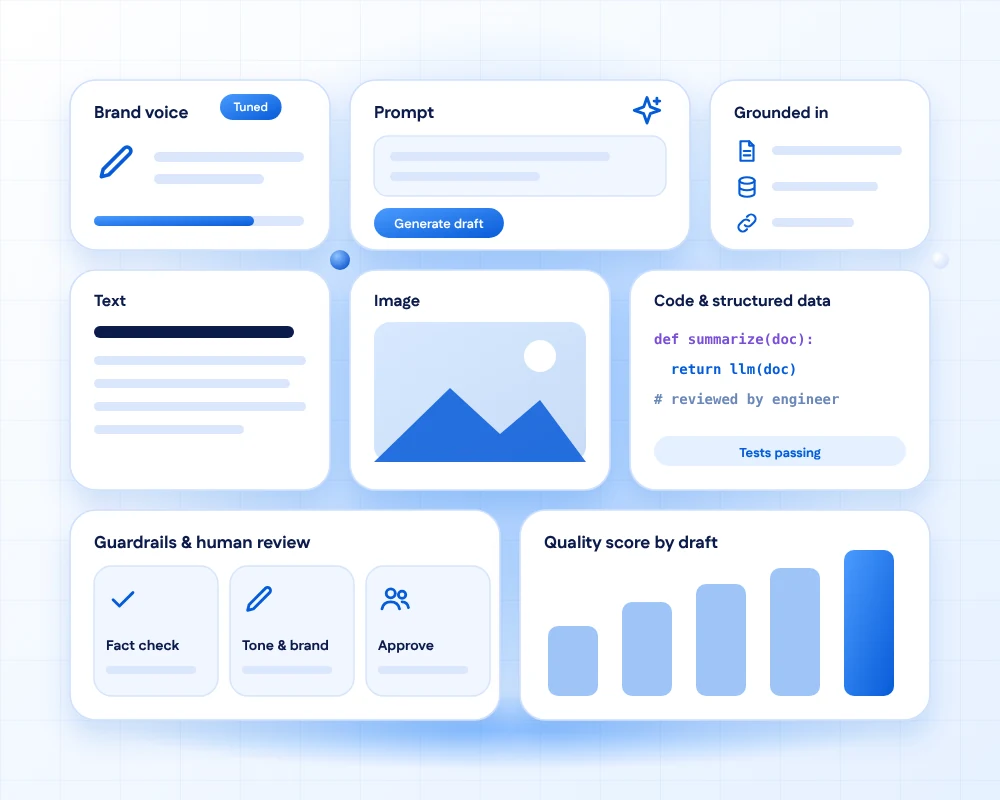
Generative AI can draft, summarise, search and write code in seconds. It can also invent facts, leak data and run up a surprising bill if it is added without care.
We build generative AI features that are grounded in your own content, reviewed by people where it matters, and measured against a test set so quality is a number, not an opinion.
You get a clear route from first prototype to a production system, with the model behind a gateway so you are never locked in.
- 11+Years of building business software
- 50+Global long-term clients
- 2,000+Projects delivered
- 24 hrsResponse time on queries
Where it pays off
Six places generative AI helps
We start where time or quality clearly improves.

Content at scale
Product descriptions, emails, reports and knowledge articles drafted in your voice, then edited by your team.

Faster engineering
Code suggestions, test drafts and documentation that shorten delivery without lowering the review bar.

Finding answers
Staff and customers ask in plain language and get answers from your own documents, with sources shown.

Visual and media work
Concept images, variations and product visuals that give designers a faster starting point.

Customer experience
Assistants that resolve routine questions and hand over to a person when it matters.

Back-office work
Summaries, classification and data extraction that remove hours of reading and retyping.
Services
Our Generative AI Services
From a first prototype to a governed production system.
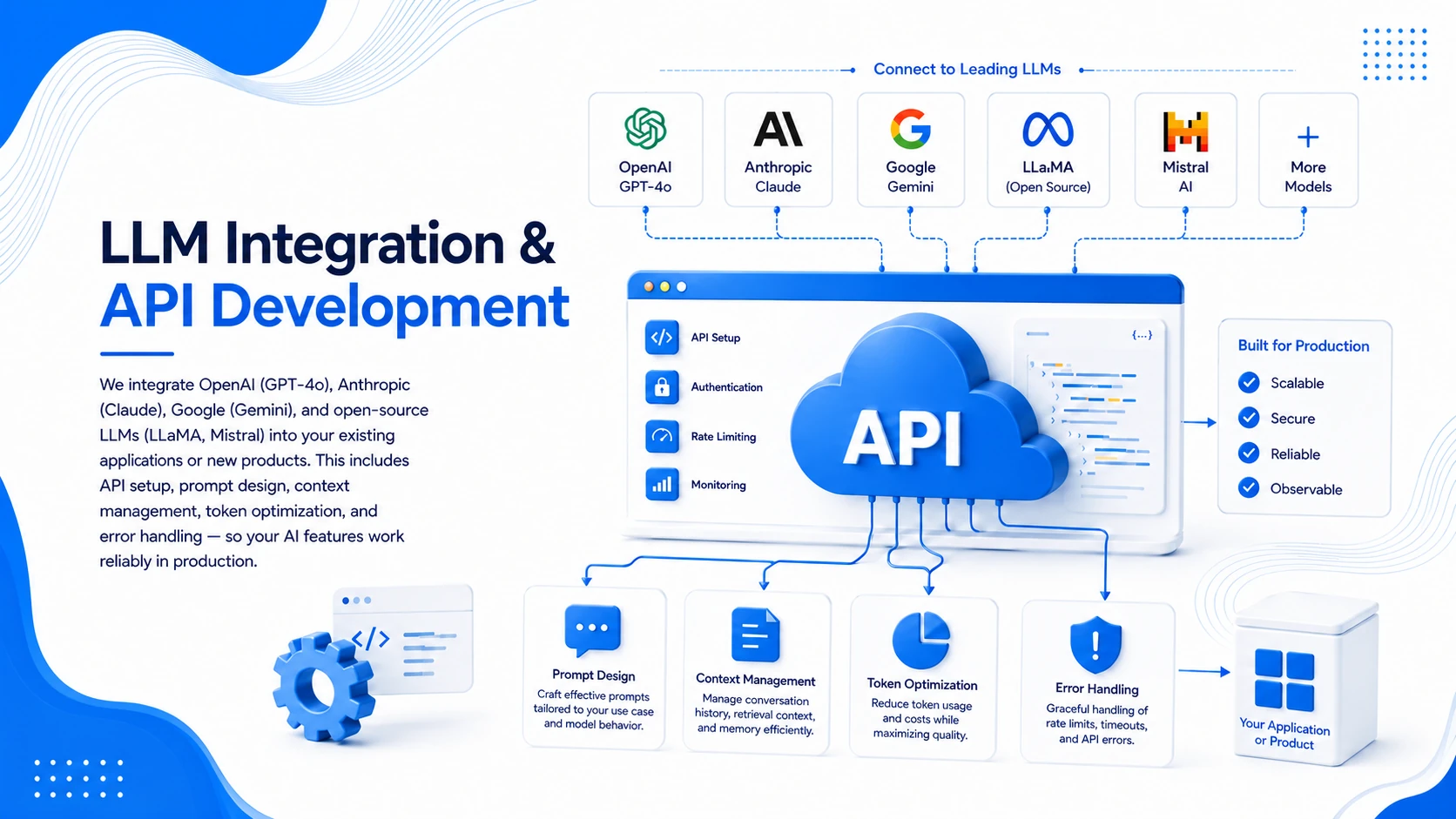
LLM Integration & API Development
Connect language models to your apps through a clean gateway, with prompts, tools, logging and spending limits.
WITH AIModel choice per task, so simple jobs use cheaper models.
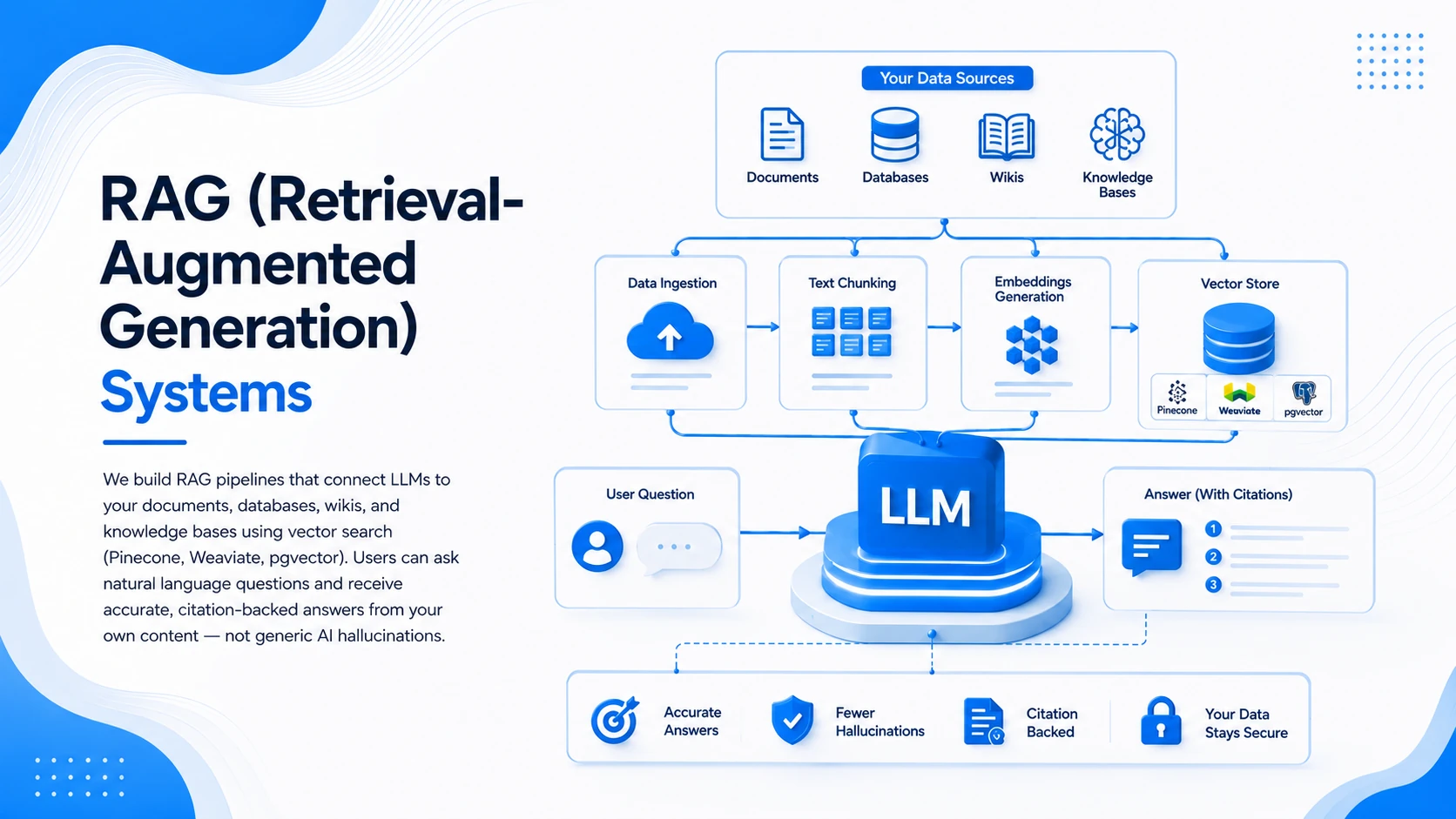
RAG (Retrieval-Augmented Generation) Systems
Answers grounded in your own documents, with sources, access rules and checks for out-of-date content.
WITH AIRetrieval tuned and tested on your real questions.
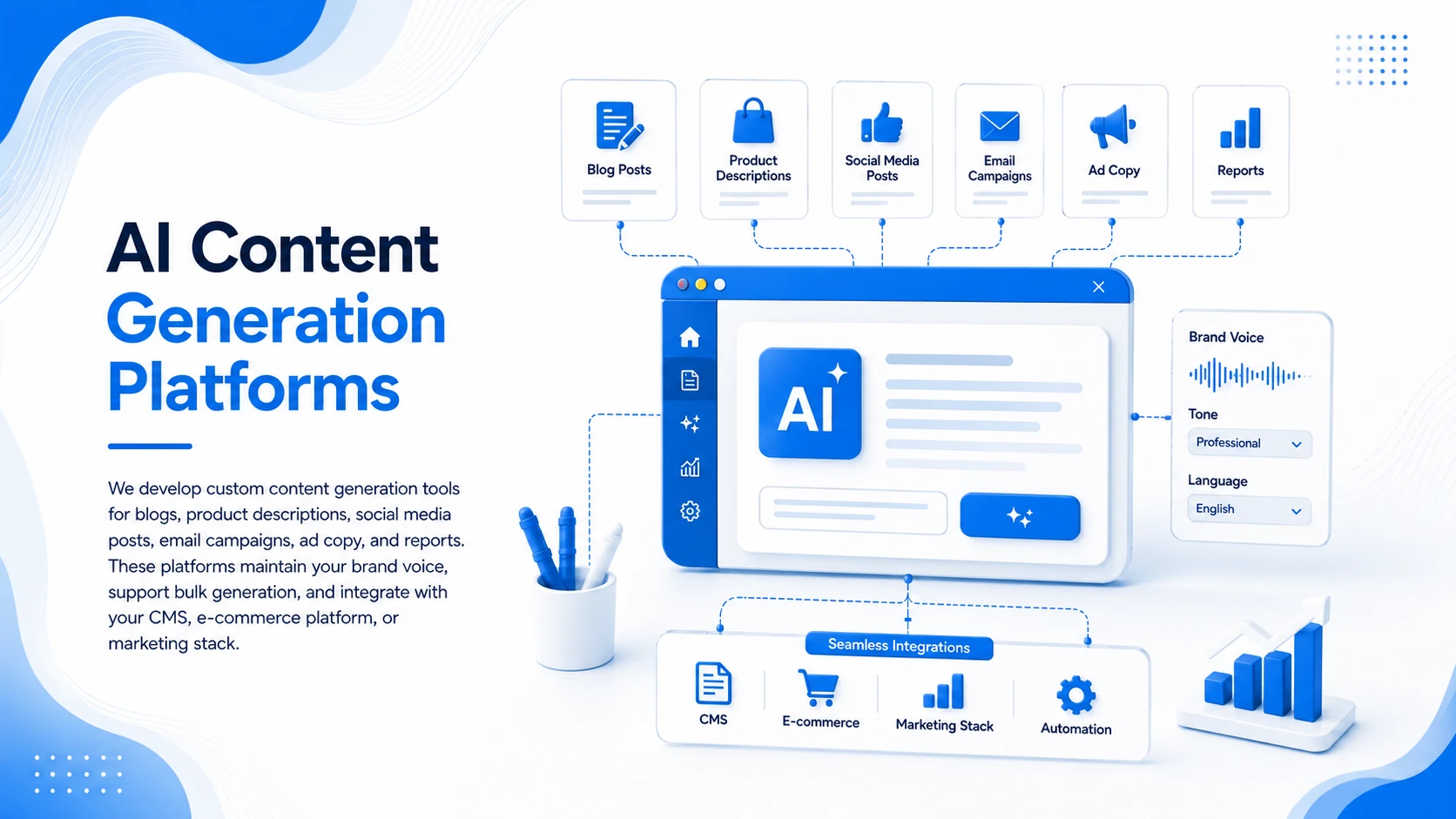
AI Content Generation Platforms
Workflows where AI drafts and people approve, with brand voice, templates and an audit trail.
WITH AIStyle and fact checks before anything is published.
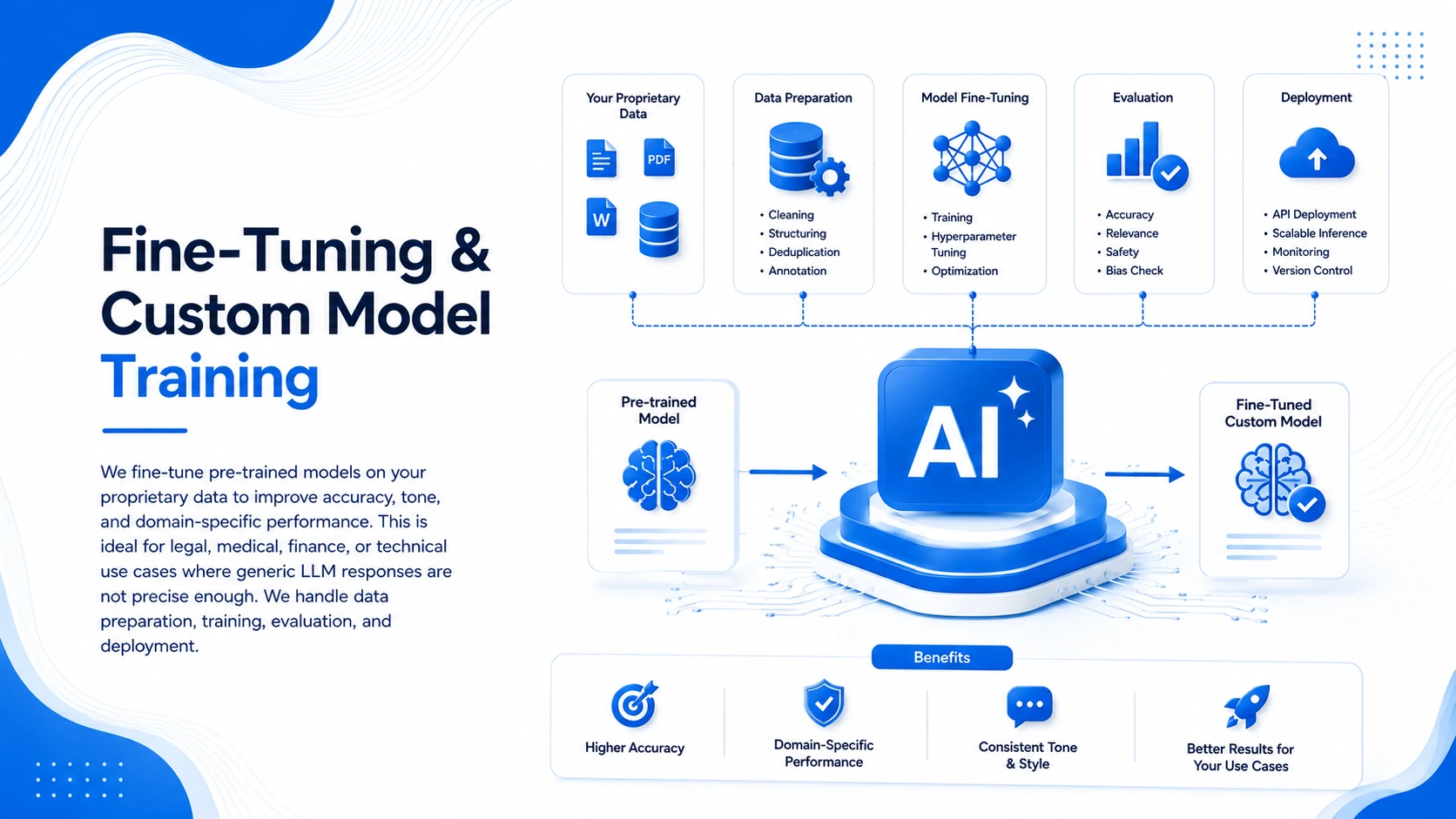
Fine-Tuning & Custom Model Training
Custom models for cases where prompting and retrieval are not enough, backed by evaluation data.
WITH AIWe test whether fine-tuning really beats the cheaper options first.
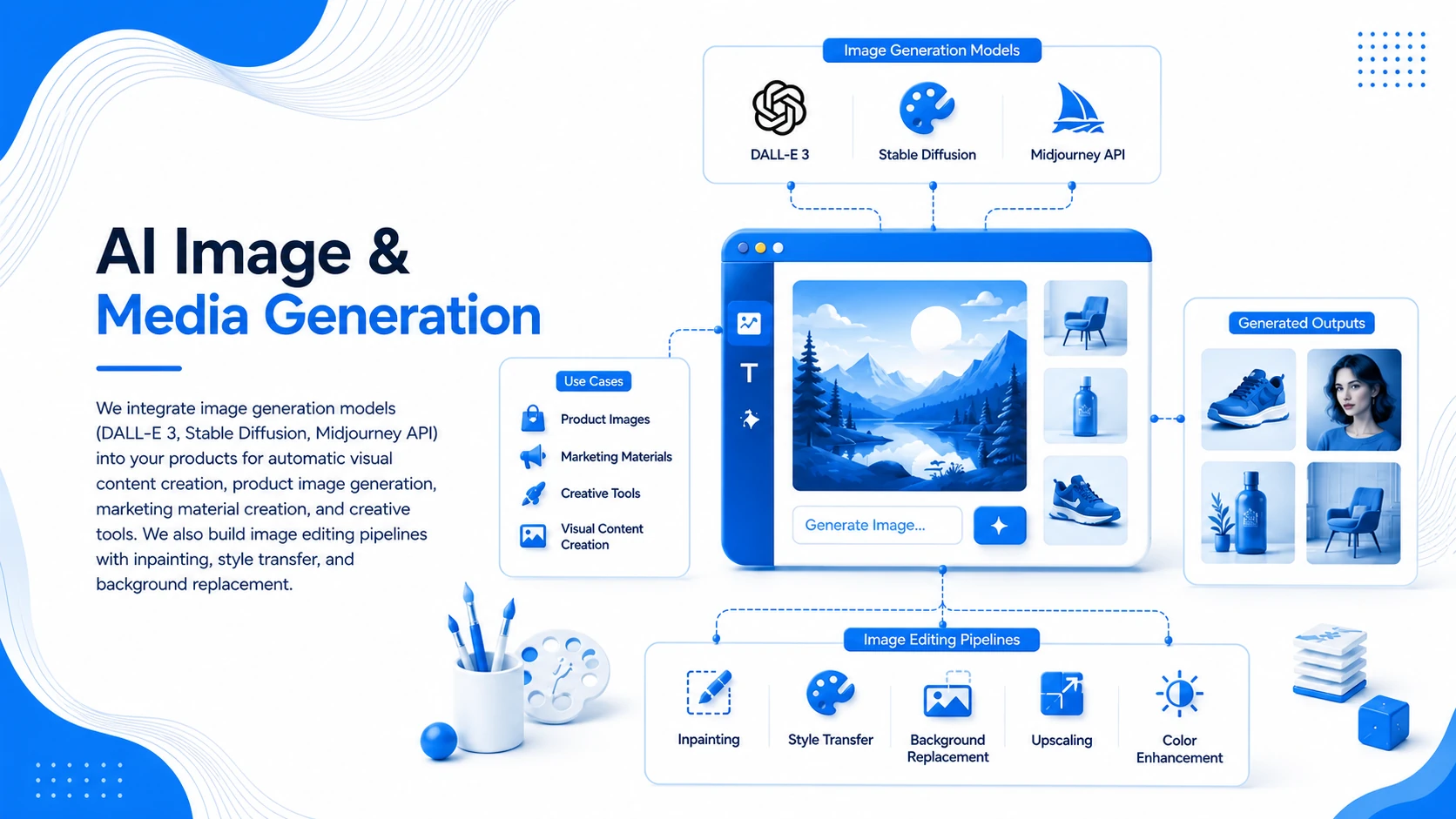
AI Image & Media Generation
Image and media pipelines with approval steps, licensing checks and consistent brand styling.
WITH AIAutomated checks for brand rules and unwanted content.
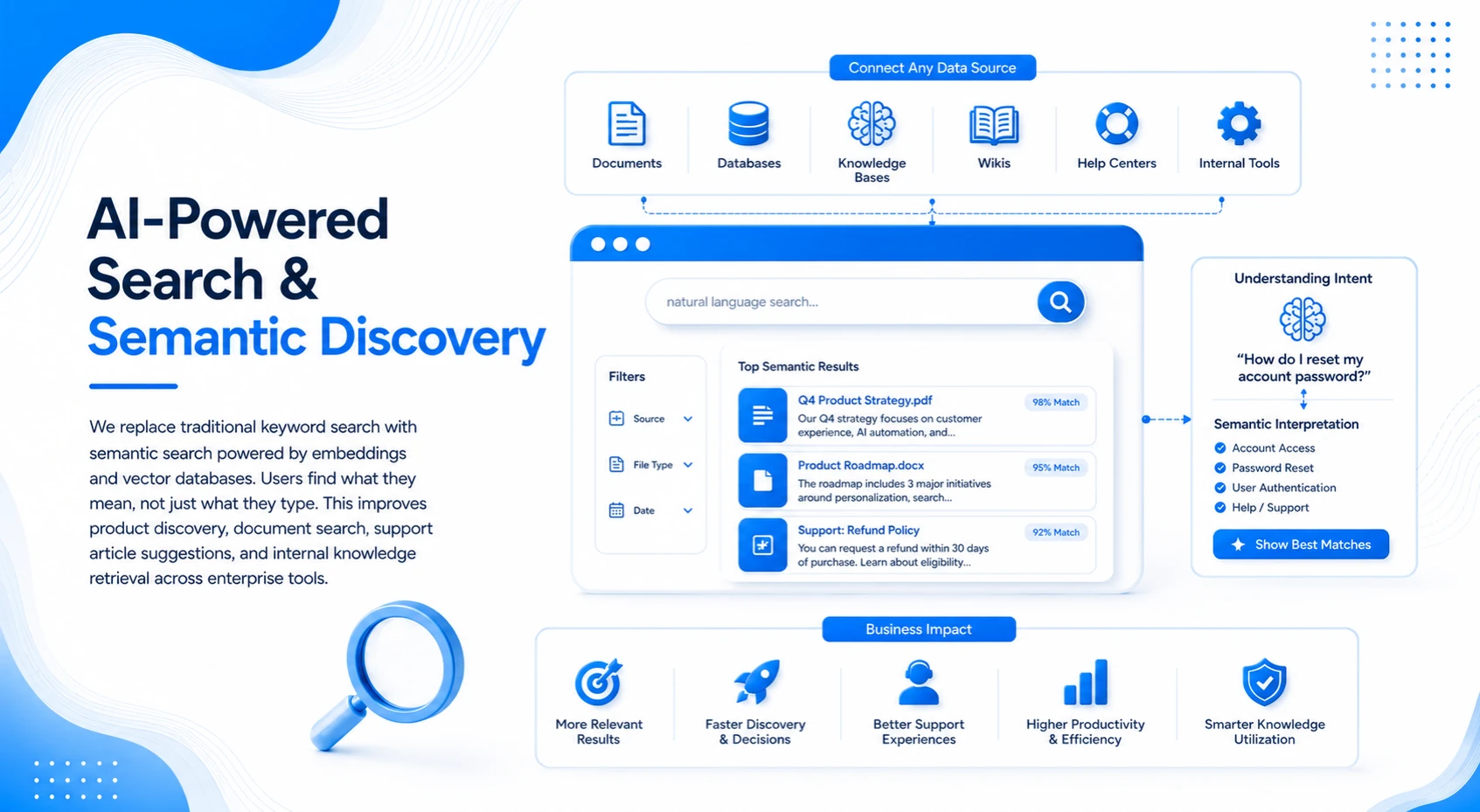
AI-Powered Search & Semantic Discovery
Search that understands meaning, so people find the right product, policy or document faster.
WITH AISearch quality measured against what users actually click.
Choosing an approach
Prompts, retrieval, fine-tuning or custom?
We try the lighter options first and only move up when the results justify it.
| Approach | How it works | A good fit for | Trade-off |
|---|---|---|---|
| Better prompts and tools | Instructions and examples sent with each request | Quick wins, formatting and simple tasks | Cannot add knowledge the model lacks |
| Retrieval (RAG) | The model reads relevant passages from your documents | Questions about your products, policies and data | Quality depends on how well the content is prepared |
| Fine-tuning | The model is trained further on your examples | A consistent style, format or specialist task | Needs good data, evaluation and upkeep |
| Custom model | A model built or heavily adapted for you | Rare cases with strict privacy or domain needs | Highest cost and effort, so used last |
Many production systems combine good prompts, retrieval and a small amount of fine-tuning.
Responsible by design
Useful, safe and affordable
Four habits that run through every generative AI project we deliver.

Data stays yours
We agree what may leave your environment, mask sensitive fields and choose providers with the right data terms.

Grounded answers
Answers cite their sources, and the system says so when it cannot find one.
People approve
Anything customer-facing, legal, financial or medical passes through a reviewer.

Costs capped
Caching, model routing and usage limits keep spending predictable.
How we work
From idea to measured launch
Five steps that keep generative AI honest.
Pick the use case
Choose one or two places where time or quality clearly improves, and agree how success is measured.
DiscoveryTest on real material
A small prototype with your own documents and questions shows what works before any big build.
PrototypeBuild with guardrails
Add access rules, review steps, logging and cost controls to the winning approach.
SafetyEvaluate honestly
Score answers on a test set, check for harmful output, and compare with the manual process.
EvaluationLaunch and improve
Release gradually, watch quality and cost, and keep tuning with real feedback.
Operate
Quality you can check
What we verify before launch
The things that decide whether people trust the system.
- A test set before launchReal questions with agreed good answers, so quality is a number.
- Source citationsUsers can see where an answer came from and open the document.
- Safe failureWhen confidence is low the system says so or hands over to a person.
- Privacy reviewPrompts, logs and vendor terms reviewed with your security team.
- Cost per task trackedSpend is watched from week one, not discovered on the invoice.
- Easy to switch modelsThe model sits behind a gateway, so you are not locked in.
Go deeper
Dedicated pages for two core techniques
Most generative AI projects rely on these two.

FAQs
Generative AI questions, answered
It is building software that uses generative models, such as large language models and image models, to create text, code, images or answers. The work includes choosing the model, connecting it to your data, adding safety checks and measuring quality, not just calling an API.
Common uses include drafting content, answering questions from company documents, summarising long material, extracting data from documents, assisting developers and powering customer assistants. We start with the one or two uses that save the most time.
Generative models can state wrong things confidently. We reduce this by grounding answers in your documents, showing sources, testing on real questions and keeping people in the loop where mistakes would matter.
We agree up front what data may leave your environment, mask sensitive fields, and choose providers whose data terms fit your needs. For stricter cases, models can run in your own cloud account or on your own servers.
Usually start with better prompts, then retrieval over your documents. Fine-tuning helps with consistent style or specialist tasks. We test the cheaper options first and fine-tune only when it clearly pays off.
We choose per task based on quality, speed, cost and data rules, including commercial and open models. The model sits behind a gateway so it can be changed later without rebuilding.
We build a test set of real questions and agreed good answers, score the output, check for harmful or off-topic responses, and keep measuring after launch.
Running cost depends on the model, volume and length of text. We estimate cost per task early and use caching, smaller models for simple jobs and limits to keep it predictable.
A working prototype on your own material often takes two to four weeks. A production release with guardrails, integration and evaluation commonly takes two to four months, depending on scope.
Yes. Most features can be added to an existing web, mobile or internal system through an API layer, without rewriting what already works.
Ready to try generative AI?
Tell us where your team loses time. We will suggest the first use case, test it on your own material and show you the results before you commit.